Reformer Pilates: the complete guide for professionals
The machine, the benefits to present to your clients, the audiences, the basic exercises, how to organise classes and how to choose Reformers: the reference guide for studios, physiotherapists, hotels and gyms.
In brief
The essentials in 30 seconds
- Pilates Reformer is the practice of Pilates on a machine with a sliding carriage and springs, invented by Joseph Pilates.
- The springs create adjustable resistance: the same machine serves for gentle rehabilitation and intense strengthening alike, which broadens a studio's clientele.
- Benefits to present to clients: deep core strength, posture, mobility and muscle tone, with no impact on the joints.
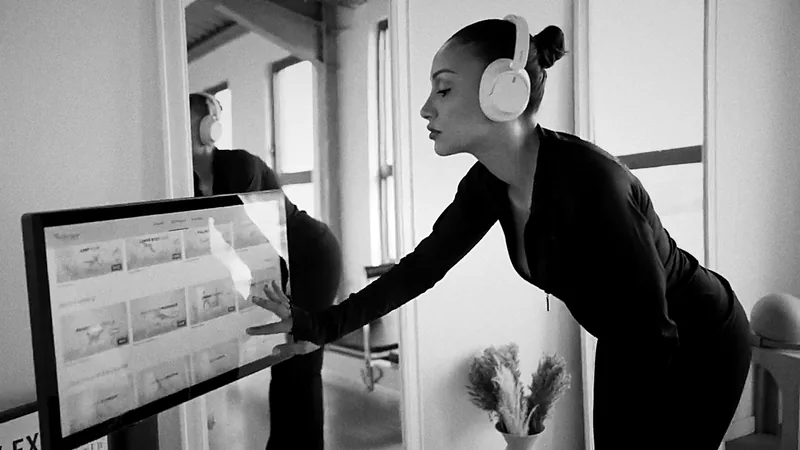
- A studio combines group classes, private classes and, increasingly, digital guided-autonomy sessions on a touchscreen kiosk.
- Choosing studio Reformers comes down to spring quality, frame stability, speed of adjustment and the aesthetic of the space.
Pilates Reformer is the practice of Pilates on the Reformer, a machine with a sliding carriage and springs. Invented by Joseph Pilates a century ago, it strengthens the body in depth and improves posture and mobility, with no impact on the joints. This guide is for professionals who want to offer the Reformer: Pilates studios, physiotherapists, hotels, gyms and companies.
What is Pilates Reformer?
Pilates is a method centred on control, breathing, deep core strength and precision of movement. It can be practised on the mat or on the apparatus designed by Joseph Pilates, the best known of which is the Reformer.
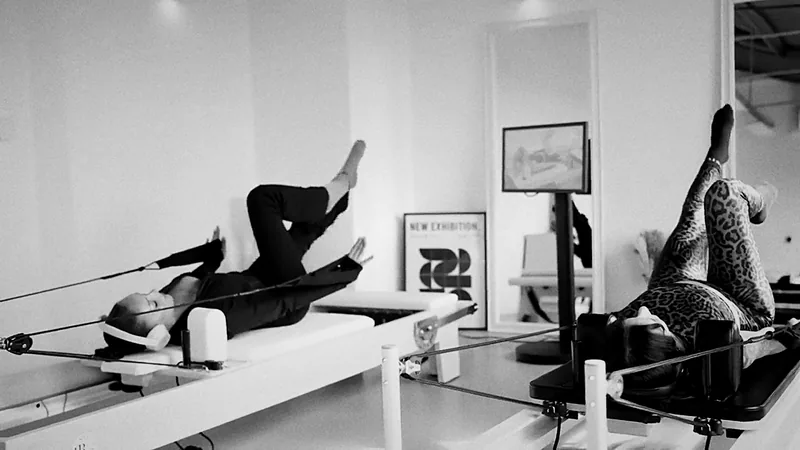
On the Reformer, you push and pull against the resistance of springs, lying down, sitting, kneeling or standing. The springs can assist a difficult movement or, on the contrary, make it more demanding. This is what makes the same machine both a tool for gentle rehabilitation and a tool for intense strengthening, and what allows a studio to serve a very broad clientele.
How does a Reformer work?
- The frame: in wood or aluminium, it supports the whole machine. Its rigidity determines stability.
- The carriage: the padded platform that slides on rails.
- The springs: of different tensions, they connect the carriage to the frame and set the resistance.
- The footbar: adjustable in height, it provides support for pushing.
- The straps and pulleys: for pulling work with the hands or feet.
- The shoulder rests and headrest: they stabilise the body and protect the neck.
Spring adjustment is the key: more springs do not always mean harder. On some exercises, light resistance demands more control.
The benefits to present to your clients
Deep strengthening
The Reformer works the deep muscles of the trunk, pelvic floor and back, the ones that stabilise the spine.
Better posture
Alignment work on the pelvis, spine and shoulders helps correct the imbalances caused by sitting.
Mobility and flexibility
The carriage supports the range of motion: you stretch and strengthen in the same movement.
A no-impact practice
No jumps, no shocks: this is why the Reformer is used as much in rehabilitation as in athletic preparation.
A mental effect
Concentrating on the breath and the precision of each movement makes every session a moment apart, a strong argument for a hotel or a corporate wellness area.
Which client groups for your studio?
- Beginners: the machine guides the movement and progress feels reassuring.
- Athletes: core strength, injury prevention, recovery.
- Sedentary people: posture, mobility, back comfort.
- Seniors: strength, balance and range of motion, gently.
- Patients returning to activity: on medical advice, with suitable support, particularly in a physiotherapy practice.
Precautions: in the event of pregnancy, pain, a back or joint condition, recent surgery or a heart problem, clients should first seek advice from their doctor or a physiotherapist.
Basic exercises on the Reformer
- Footwork: lying down with the feet on the footbar, you push the carriage. It warms up the legs, aligns the pelvis and establishes the breathing.
- The Hundred: lying down with the legs in the air, you pump with the arms, holding the straps. Abdominal activation and breath.
- Bridging: the bridge, with the feet on the footbar, for the glutes, hamstrings and spinal mobility.
- Feet in straps: with the feet in the straps, leg circles and openings for hip mobility.
- Rowing: seated, you pull the straps in several directions for the upper back and arms.
- Knee stretches: kneeling on the carriage with the hands on the footbar, for core strength and coordination.
Advanced sessions then move on to standing, plank or rotation exercises.
Organising Reformer classes in a studio
| Format | Supervision | Ideal use |
|---|---|---|
| Group class | Instructor present | Peak times, group dynamic |
| Private class | Dedicated instructor | Specific needs, rehabilitation, first steps |
| Digital session | Instructor on video on a touchscreen kiosk | Off-peak hours, independent clients, beginners |
As a guide, a group Reformer class is generally charged at between €25 and €45 per client, depending on the city and how upmarket the venue is. Digital sessions keep the machines in use outside class times: this is the principle of the digital Pilates Reformer studio. For the client's view of a session, read how a digital Reformer session works in a studio.
Choosing the right Reformers for a studio
- The springs: their quality ensures consistent resistance, session after session.
- The frame: in maple or aluminium, it must remain perfectly stable under intensive use.
- The carriage glide: silent and smooth, with no jolts.
- The adjustments: footbar, straps and headrest, quick to adjust between clients.
- The format: fixed for a studio, folding for a practice or a space that changes use.
- The aesthetic: the machine is part of the identity of the space.
Compare our models on the Reformers page. They are available on quote, with the site survey and floor plan.
Reformer or mat Pilates?
The mat develops independence and control using body weight; the Reformer adds the adjustable resistance of the springs, guides beginners and opens up a far greater variety of exercises. For a studio, the Reformer is also a source of differentiation and perceived value.
A short Reformer glossary
- Carriage: the moving platform.
- Footbar: the bar that supports the feet.
- Straps: the bands held with the hands or feet.
- Springs: the source of resistance, often identified by colour according to their tension.
- Powerhouse: the centre of the body, meaning the abdominals, back, glutes and pelvic floor.
- Imprint: gently settling the lower back towards the carriage.
Equip your space
Reformer Society designs turnkey Pilates Reformer studios for studios, physiotherapists, hotels, gyms and companies: site survey, floor plan, Reformers, touchscreen kiosks and guided sessions. Explore our solutions for professionals or request an assessment.
Your questions
Frequently asked questions
What is Reformer Pilates?
It is the practice of Pilates on the Reformer, a machine made up of a carriage that slides on a frame, connected to springs of different tensions, with a footbar, straps and shoulder rests.
Which clients is Reformer Pilates for?
Beginners and athletes alike, sedentary people, seniors and, on medical advice, people returning to activity after an injury or pregnancy. The adjustable resistance means each session can be adapted.
How much does a Pilates Reformer class cost the client?
As a guide, a group class in a studio generally costs between €25 and €45 depending on the city and how upmarket the studio is, and more for a private class. Class passes and memberships lower the price per class.
How much does a studio Reformer cost?
The price depends on the model, the materials and the number of machines. Reformer Society studio Reformers are available on quote, with the site survey and floor plan.
How should Reformer classes be organised in a studio?
Most studios combine group classes at peak times, private classes for specific needs, and digital guided-autonomy sessions on a touchscreen kiosk to fill the rest of the timetable.
Are there any contraindications?
The Reformer suits most people, but in the event of pregnancy, pain, a back or joint condition, recent surgery or a heart problem, clients should first seek advice from their doctor or a physiotherapist.